11.11.1918
Ogden, Utah
One Day
On Monday, 11 November 1918, the war ended. That afternoon The Ogden Standard printed its last edition. Here it is, on a table in Ogden. Scroll, and the hours pass over it.
Scroll to pass the hours
11.11.1918
Ogden, Utah
On Monday, 11 November 1918, the war ended. That afternoon The Ogden Standard printed its last edition. Here it is, on a table in Ogden. Scroll, and the hours pass over it.
Scroll to pass the hours
01 / 07
10 p.m.
Ogden, Sunday night. In France it is 5 a.m. on Monday.
Ogden is asleep. In Marshal Foch’s railway carriage in the forest of Compiègne, north of Paris, the German delegates sign the armistice shortly after five in the morning. The fighting is to stop six hours later.
Signed around 5:10 a.m., Paris time. In force at 11 a.m.
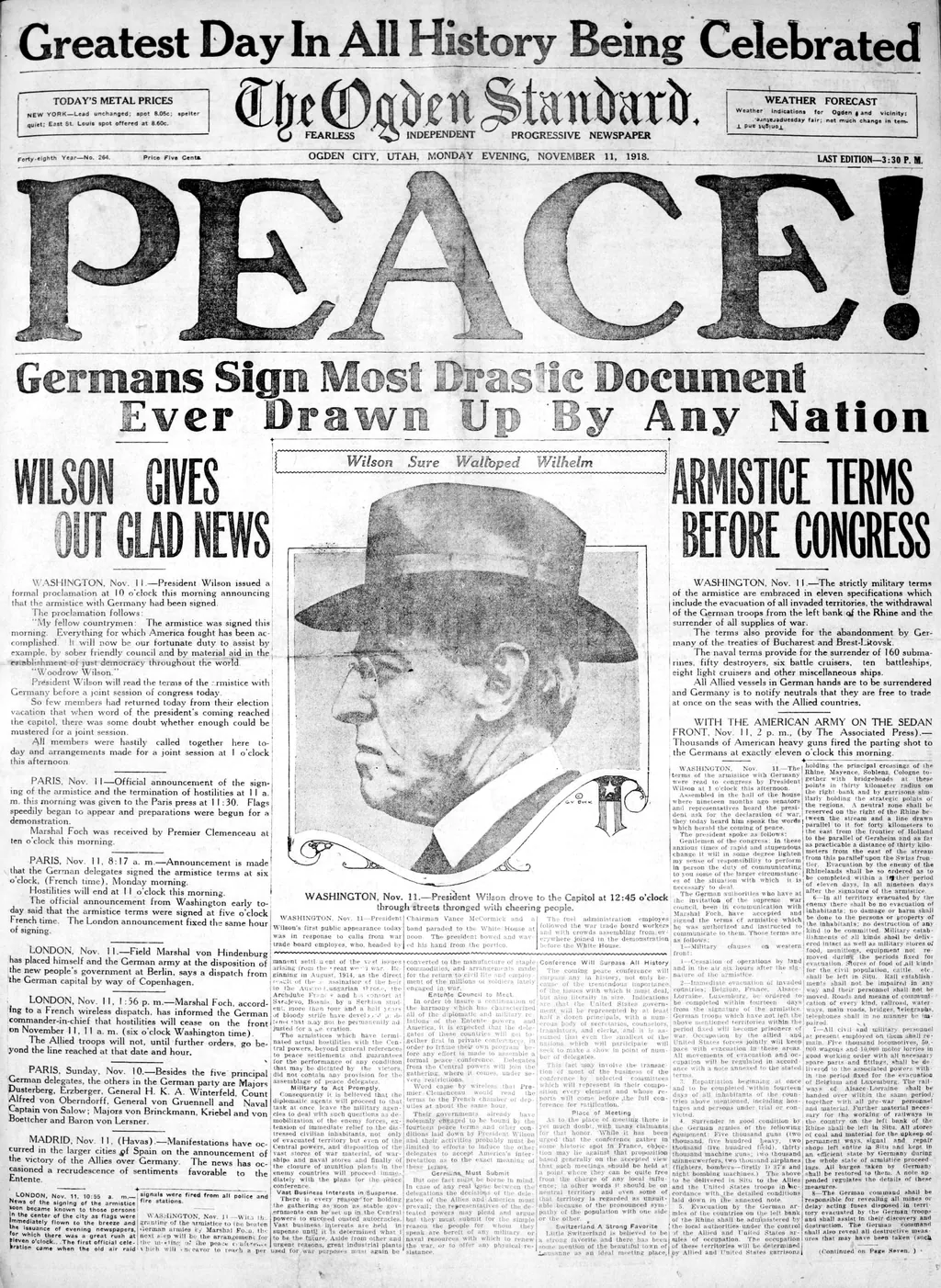
The Ogden Standard, page 1, first column: the bulletin from Paris, 8:17 a.m.
02 / 07
4 a.m.
Ogden, before dawn. On the Western Front it is 11 a.m.
At eleven o’clock on the eleventh day of the eleventh month, the guns fall silent along the Western Front. In Utah it is four in the morning. The news has been running west along the telegraph wires all night.
Paris kept Greenwich time in 1918. Ogden was seven hours behind.
Page 1, first column: the official announcement from Paris.
03 / 07
8 a.m.
Ogden. In Washington it is 10 a.m.
President Wilson issues a formal proclamation. The Standard will print it word for word on its front page that afternoon.
“My fellow countrymen: The armistice was signed this morning. Everything for which America fought has been accomplished.”
Page 1, “Wilson Gives Out Glad News”.
04 / 07
11 a.m.
Ogden. In Washington it is 1 p.m.
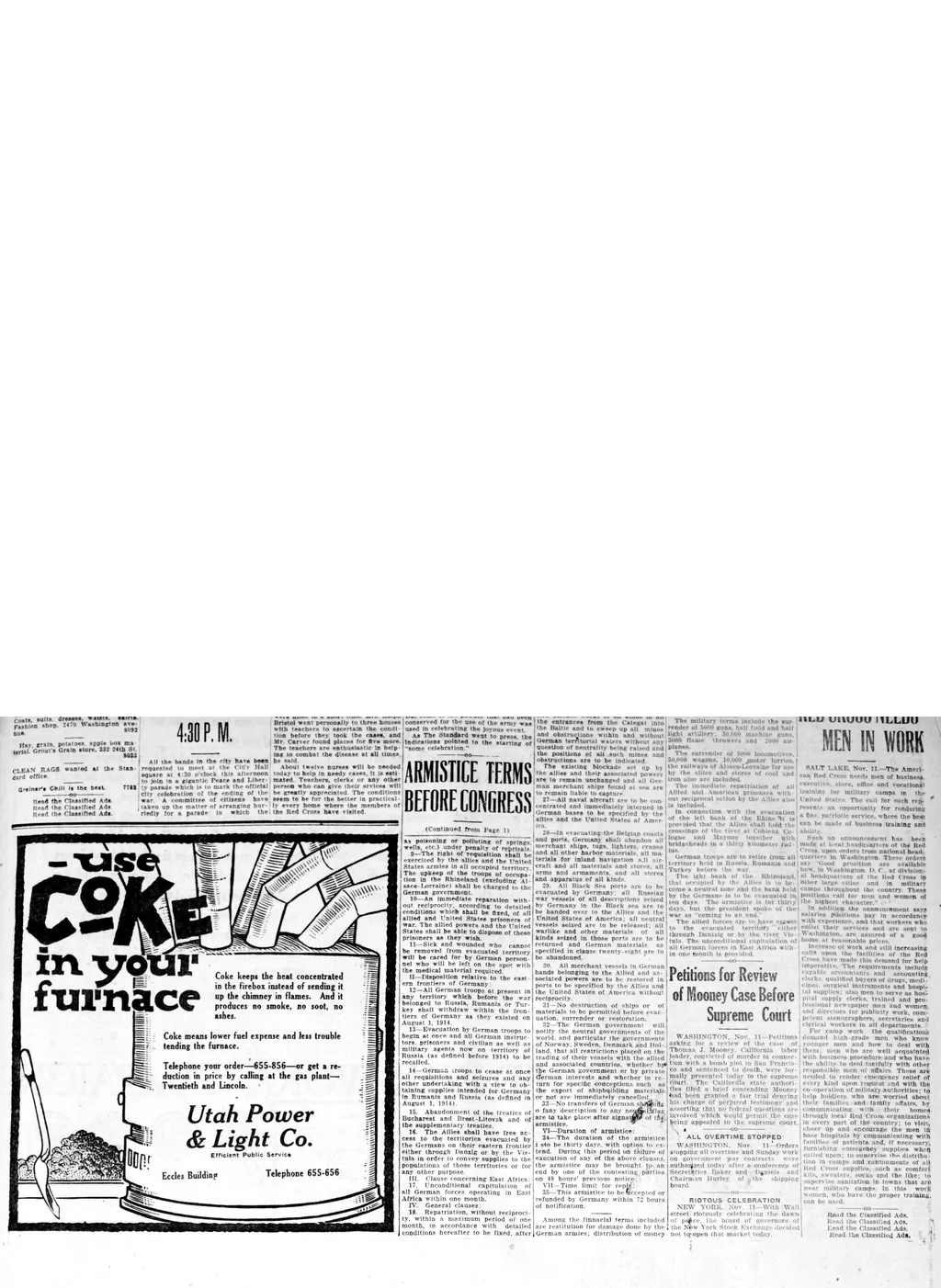
Wilson drives to the Capitol through streets thronged with cheering people and reads the terms to a joint session of Congress. Germany must leave the lands it occupies and hand over much of its fleet and weapons.
Page 1, “Armistice Terms Before Congress”.
05 / 07
Noon
Washington Avenue, Ogden
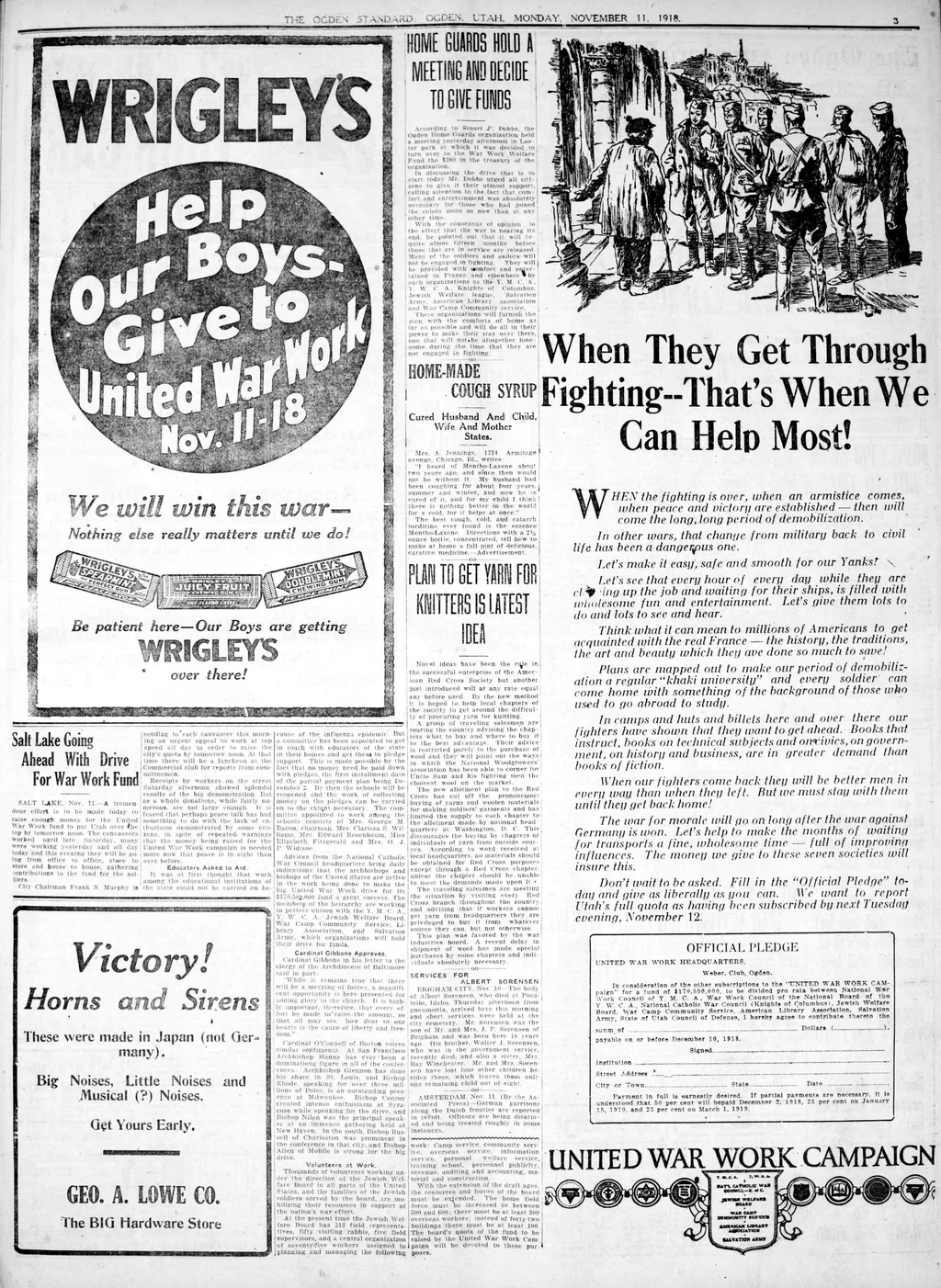
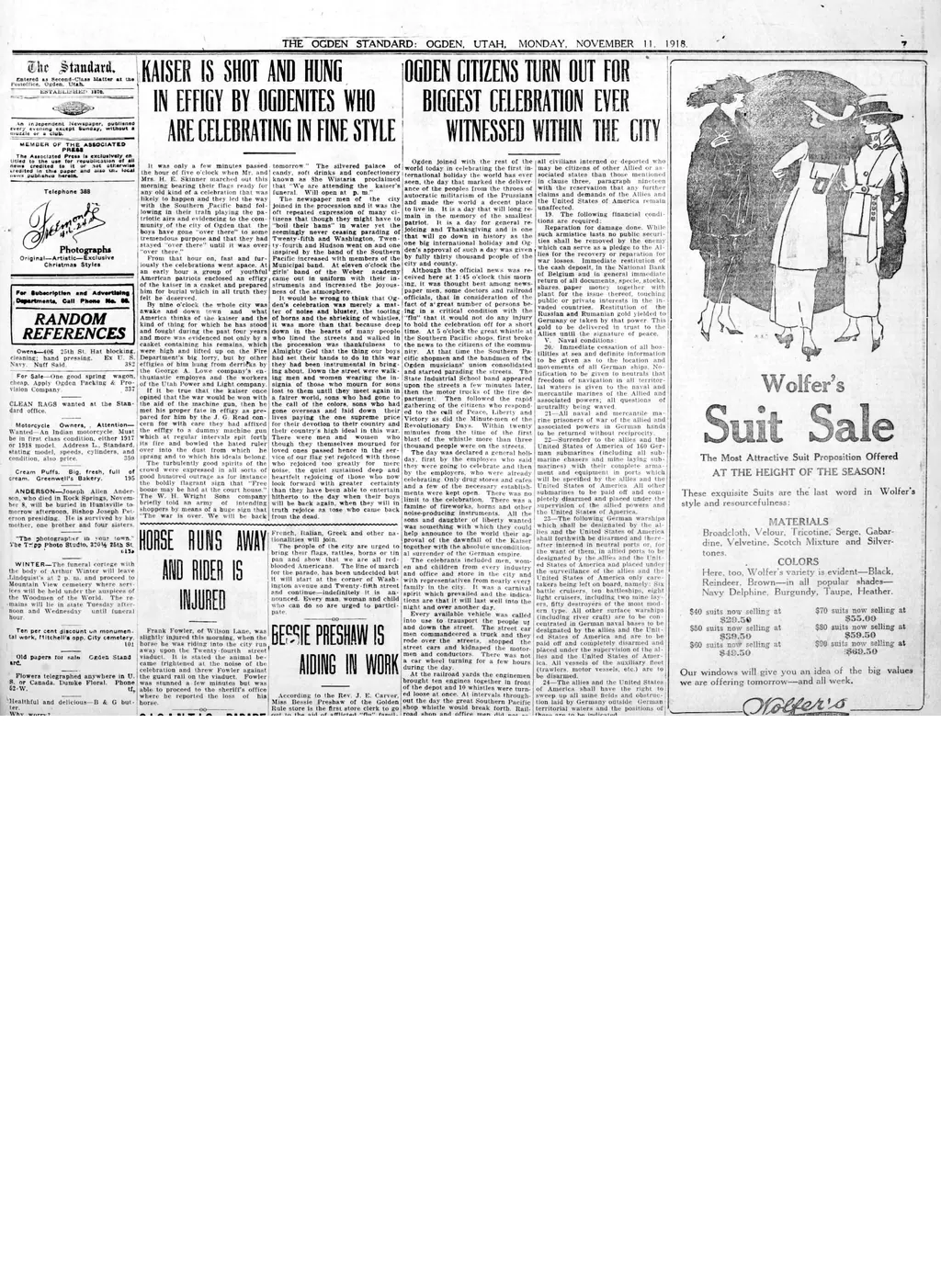
Ogden turns out for what the Standard will call the biggest celebration ever witnessed within the city. Inside the paper, the hardware store sells victory horns and sirens.
“Big noises, little noises and musical (?) noises.”
Page 3, advertisement of Geo. A. Lowe Co.
06 / 07
3:30 p.m.
The Standard’s press room, Ogden
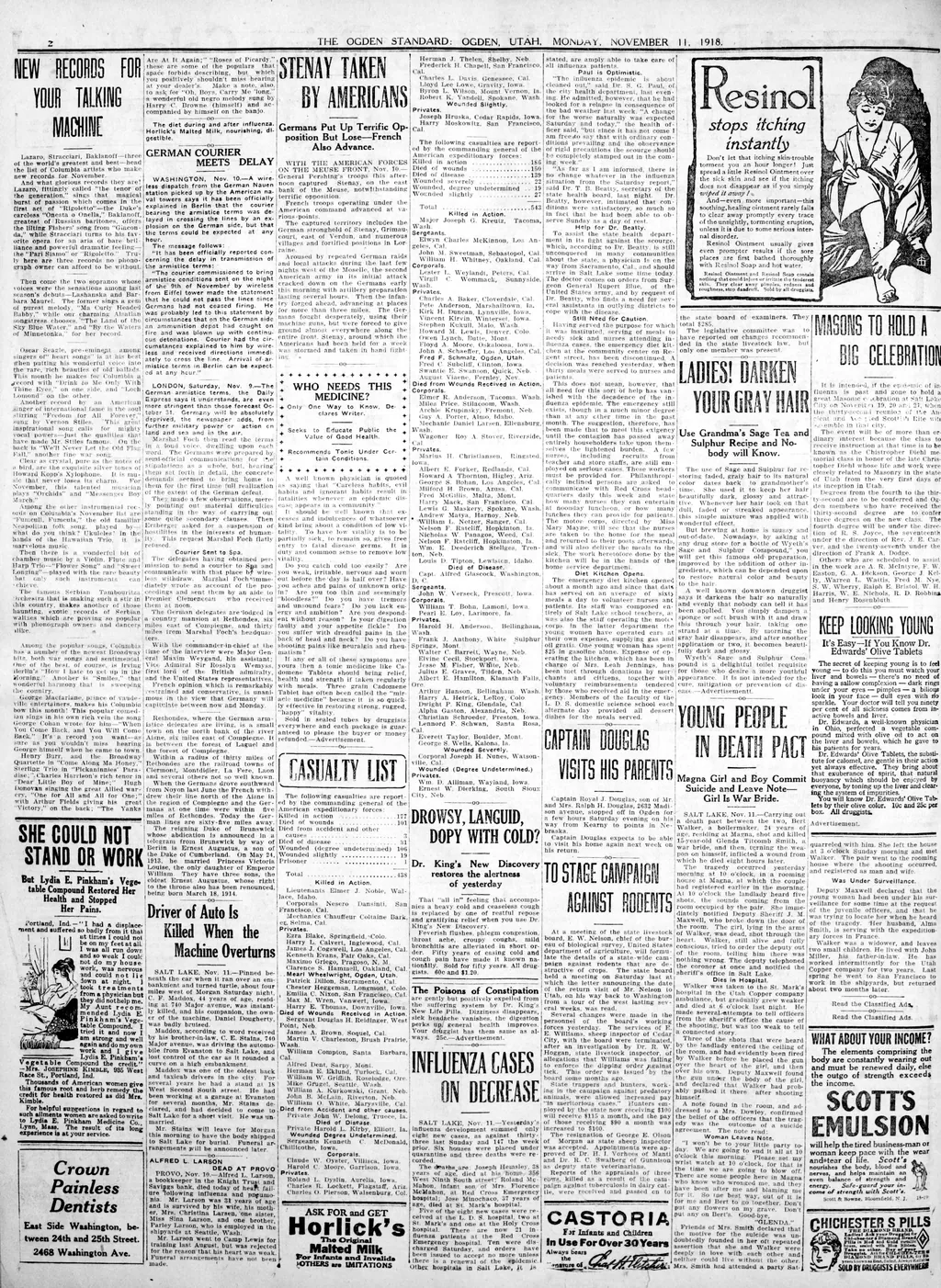
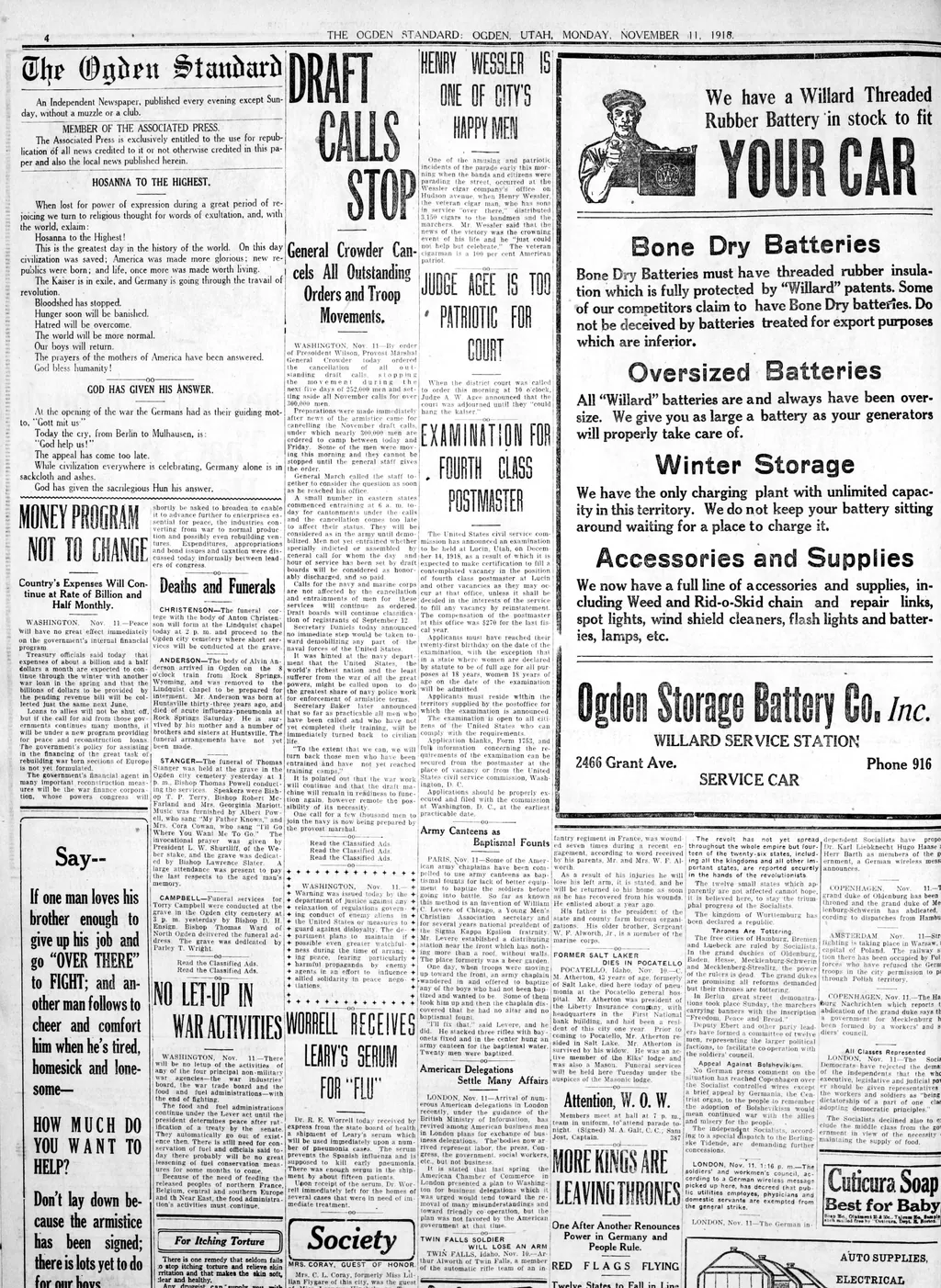
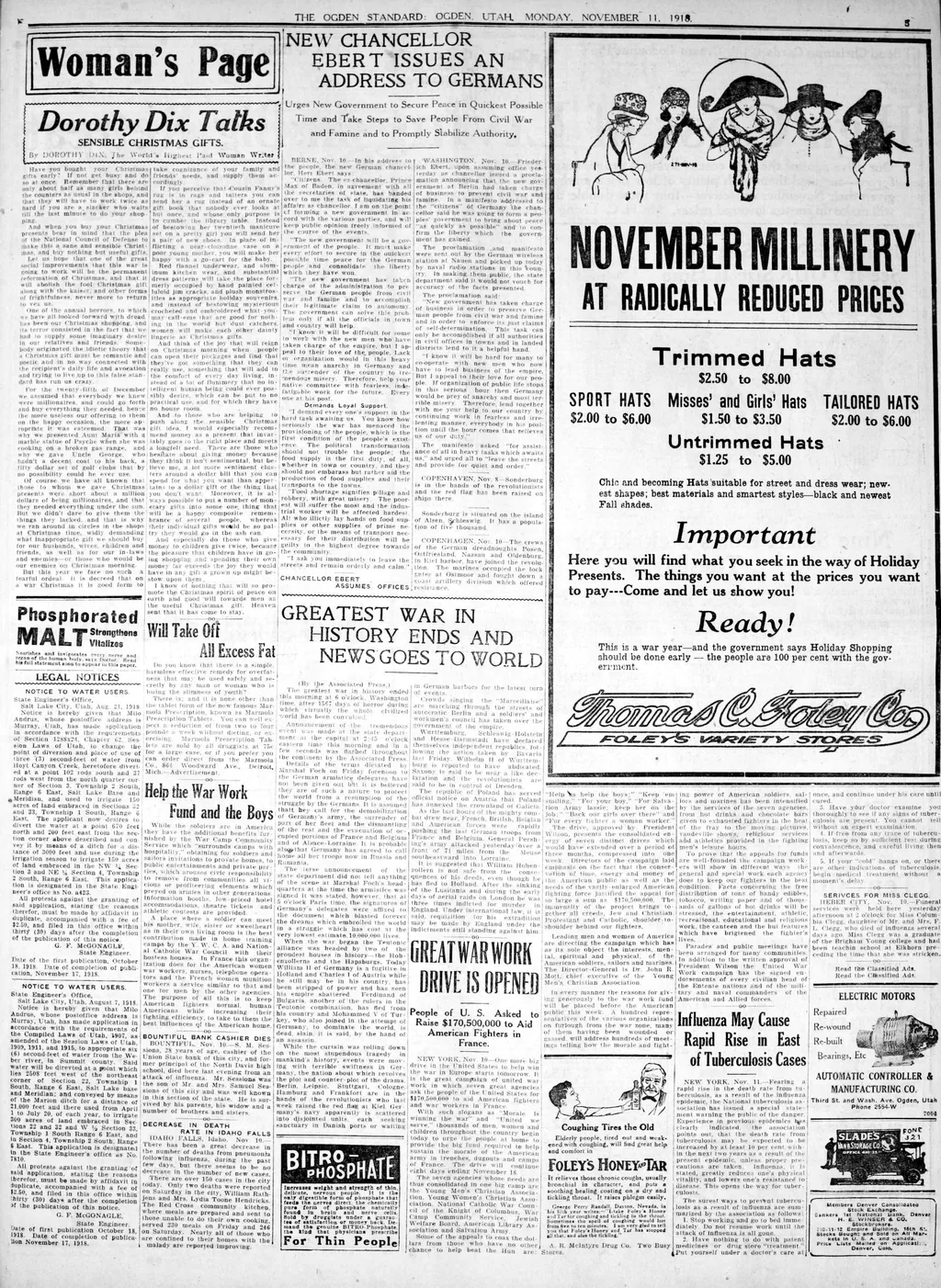
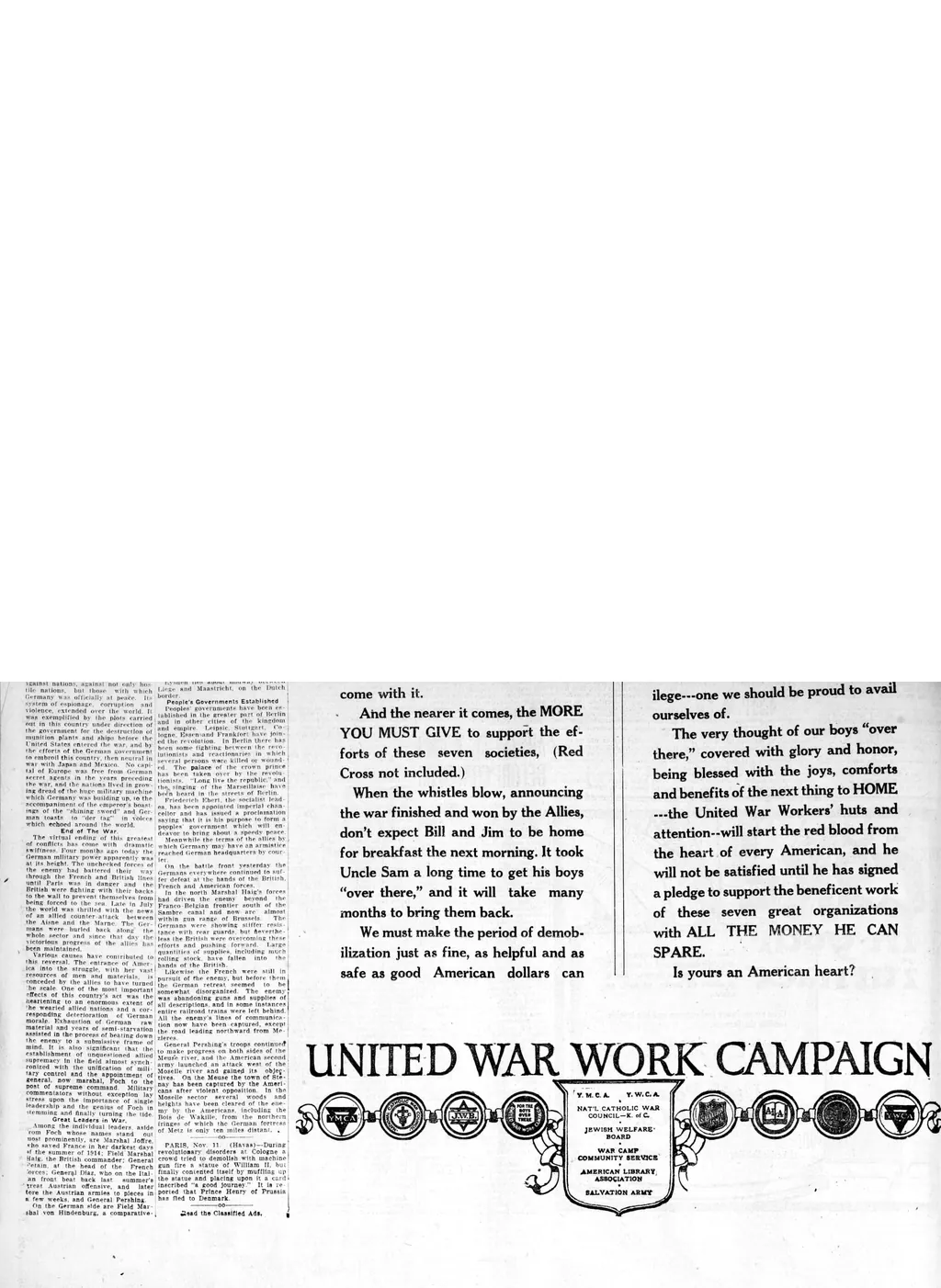
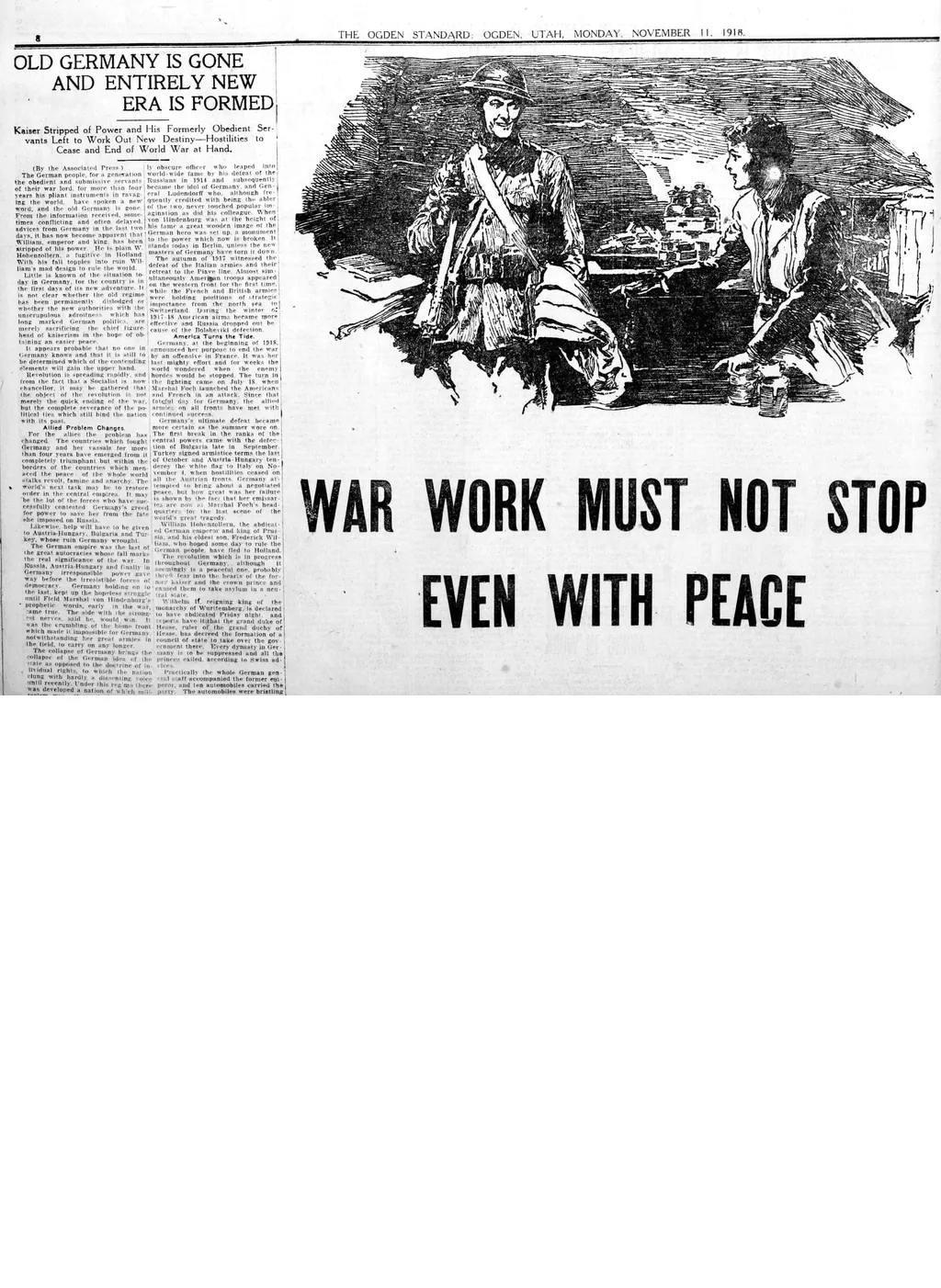
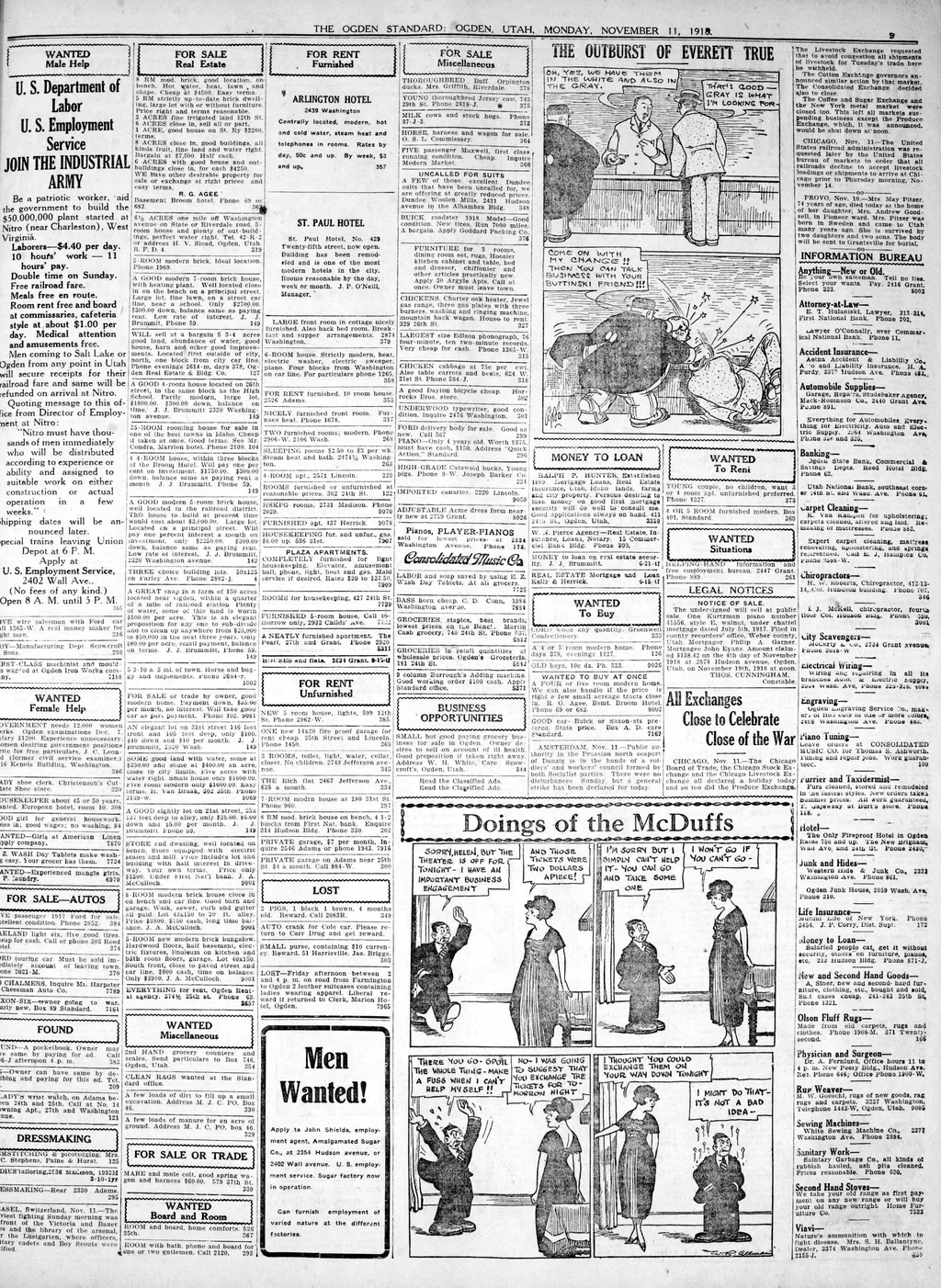
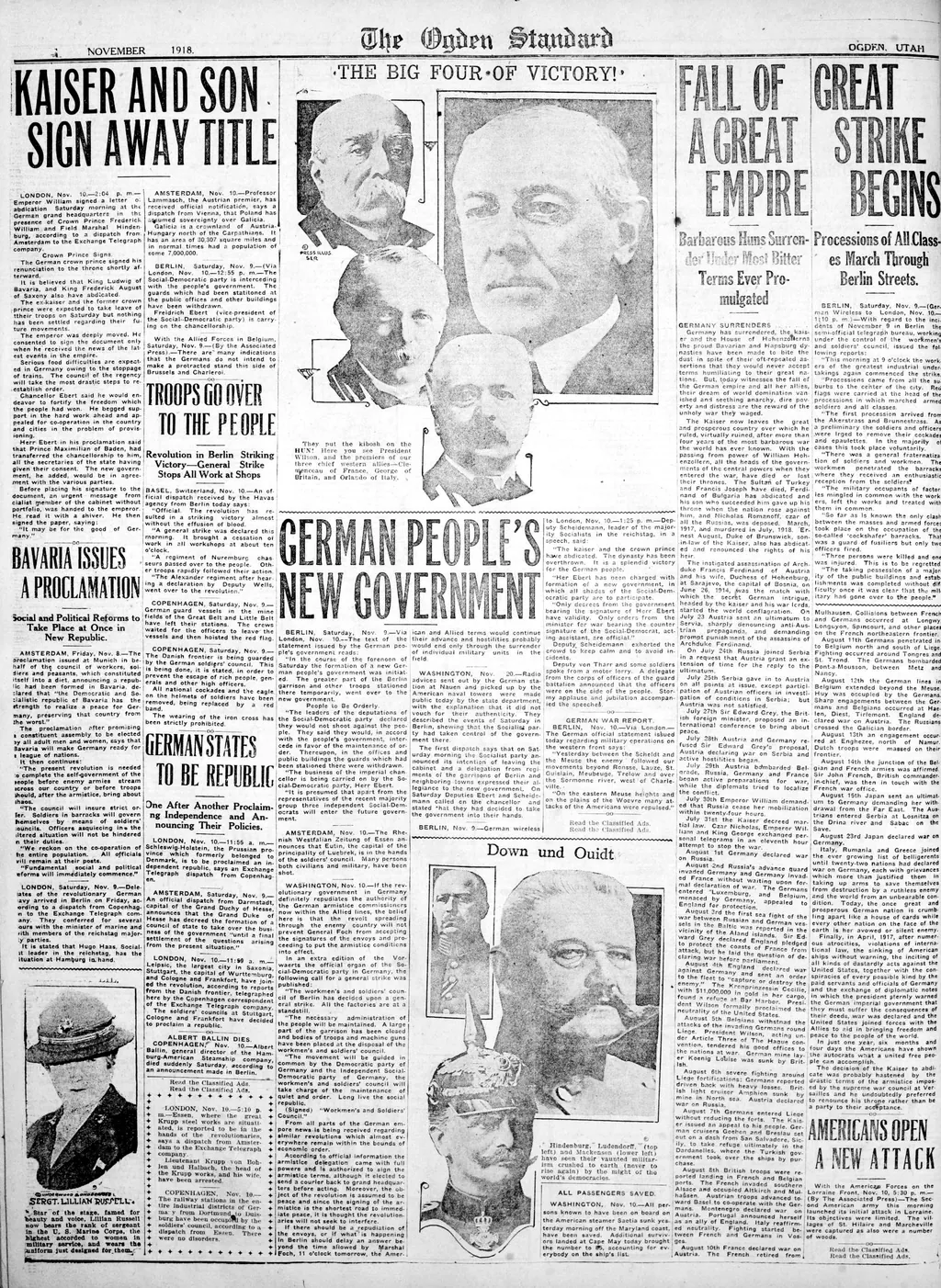
The Standard goes to press with its Last Edition. Twelve pages, and one word across the top of the first. It is yours now: pick up a page, turn it, open it to read.
Page 1, masthead: “Last Edition, 3:30 P.M.”
07 / 07
Evening
Ogden, Utah
The sun goes down in the west. The lamp comes back on. Everything on this table was printed on one afternoon, more than a century ago.
The Ogden Standard, Ogden, Utah
Monday, November 11, 1918. Last Edition, 3:30 P.M.
The day the war ended, told by one newspaper on one table. Follow the hours, or read the paper on your own at any time. Best with sound.
Sunday, 9:33 p.m.
On Monday, 11 November 1918, the war ended. That afternoon The Ogden Standard printed its last edition. Here it is, on a table in Ogden. Scroll, and the hours pass over it.
10 p.m.
Ogden is asleep. In Marshal Foch’s railway carriage in the forest of Compiègne, north of Paris, the German delegates sign the armistice shortly after five in the morning. The fighting is to stop six hours later.
Signed around 5:10 a.m., Paris time. In force at 11 a.m.
The Ogden Standard, page 1, first column: the bulletin from Paris, 8:17 a.m.
4 a.m.
At eleven o’clock on the eleventh day of the eleventh month, the guns fall silent along the Western Front. In Utah it is four in the morning. The news has been running west along the telegraph wires all night.
Paris kept Greenwich time in 1918. Ogden was seven hours behind.
Page 1, first column: the official announcement from Paris.
8 a.m.
President Wilson issues a formal proclamation. The Standard will print it word for word on its front page that afternoon.
“My fellow countrymen: The armistice was signed this morning. Everything for which America fought has been accomplished.”
Page 1, “Wilson Gives Out Glad News”.
11 a.m.
Wilson drives to the Capitol through streets thronged with cheering people and reads the terms to a joint session of Congress. Germany must leave the lands it occupies and hand over much of its fleet and weapons.
Page 1, “Armistice Terms Before Congress”.
Noon
Ogden turns out for what the Standard will call the biggest celebration ever witnessed within the city. Inside the paper, the hardware store sells victory horns and sirens.
“Big noises, little noises and musical (?) noises.”
Page 3, advertisement of Geo. A. Lowe Co.
3:30 p.m.
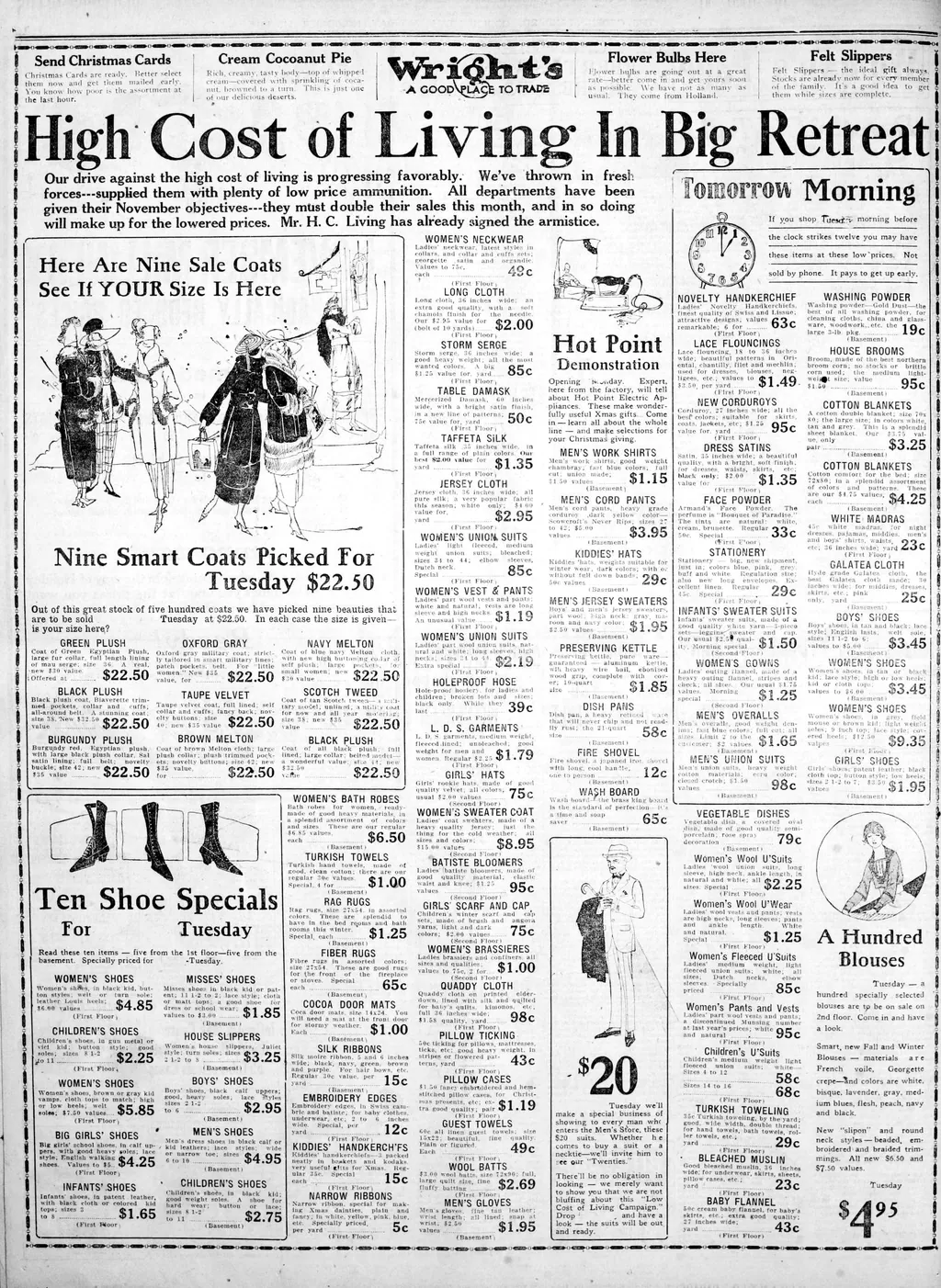
The Standard goes to press with its Last Edition. Twelve pages, and one word across the top of the first. It is yours now: pick up a page, turn it, open it to read.
Page 1, masthead: “Last Edition, 3:30 P.M.”
Evening
The sun goes down in the west. The lamp comes back on. Everything on this table was printed on one afternoon, more than a century ago.
At eleven o’clock on 11 November 1918, the guns fell silent. In Ogden, a whole town ran into the street. More than a century later, war still reaches millions of people.
In Gaza. In Ukraine. In Sudan.
The International Committee of the Red Cross received the Nobel Peace Prize in 1917 for its work in the First World War. Today it helps people in conflict zones around the world, among them Gaza, Ukraine and Sudan.
Donate to the Red Cross (ICRC)Opens icrc.org in a new tab. This project is not affiliated with the ICRC and receives nothing.
The Ogden Standard, Ogden, Utah, Monday, November 11, 1918, Last Edition, 3:30 P.M. Library of Congress, Chronicling America, LCCN sn85058396. Public domain. Pages 7, 9 and 10 survive only in part; the missing areas are shown as blank paper. All sounds are synthesised in your browser.
How to read the paper